
Women’s Health Was Never “Broken.” It Was Ignored.
By Rebecca Bartlett, Founder & CD of Bartlett Brands, Taylor Hansen, Chief Marketing & Commercial Officer at Xella Health
Every Thursday, THE BOARD brings you industry insights from our Members to your inbox.
Hot Flash—Why Women’s Health Is Heating Up
Women’s health isn’t having a trend moment. It’s having a full blown reckoning.
It’s accelerating at breakneck speed. This is the story behind the surge.

THE 1993 WAKE-UP CALL.
1993 was the year clinical research studies were finally required to include women as distinct from men.
Before that? Women were largely excluded from medical data. Treatments were tested on male biology and adjusted—literally—into “smaller versions” for women.
The consequences were massive:
Misunderstood symptoms
Improper dosing
Under-researched life stages like perimenopause and menopause
Entire conditions dismissed or minimized
Then came 2002 and the early stoppage of the Women’s Health Initiative hormone study. The resulting black box warnings on hormone therapy created a generation-long freeze in care.
Fast forward two decades: the FDA has begun removing those warnings, acknowledging the risks were overstated.
The result? A 20-year treatment gap for millions of women.
This isn’t a trend cycle. It’s a correction.
THE PERFECT STORM DRIVING CHANGE.

So why is women’s health “hot” right now?
Because culture, technology, economics, and lived experience collided.
1. A Collapse in Institutional Trust
Women have felt the gender bias in healthcare for decades. Add social media, the 24-hour doom cycle, food system dysfunction, and pharmaceutical skepticism—and trust erodes.
So what do women do?
We investigate.
We self-diagnose.
We compare notes on TikTok and Reddit.
We upload lab results into AI tools.
Patients are now arriving informed—and often unwilling to “wait it out” or accept “it’s just stress.”
2. COVID Normalized At-Home Health
The pandemic changed healthcare behavior permanently:
At-home testing became mainstream.
Telehealth became normal.
Wellness shifted from aesthetics to internal metrics.
Burnout exposed physiological cracks.
The “high-functioning woman” juggling career, caregiving, fitness, and aging parents began asking deeper questions about anxiety, sleep disruption, cardiometabolic health, and hormone imbalance.
Friction drives innovation.
3. Roe v. Wade Was Overturned
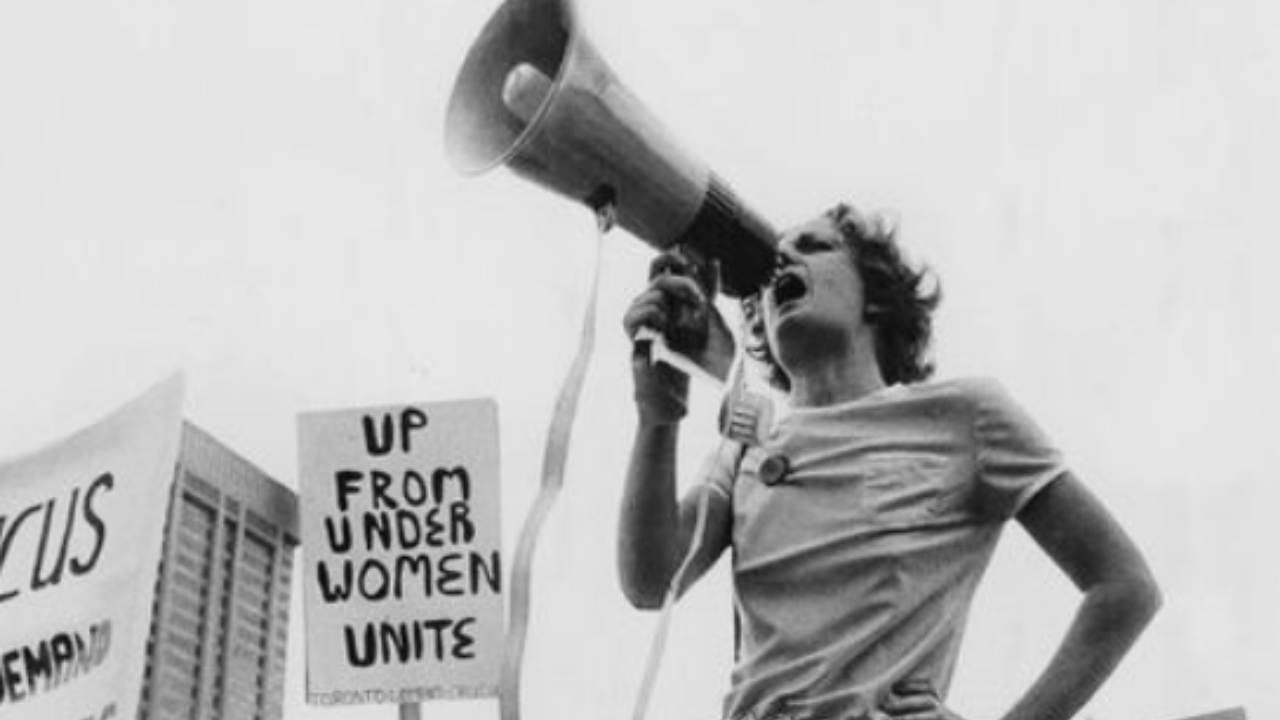
The 2022 reversal of Roe v. Wade wasn’t just political—it was catalytic.
Access to reproductive care suddenly felt fragile. Women became acutely aware of healthcare availability, autonomy, and geography.
When access tightens, demand intensifies.
Innovation follows.
4. AI Changed the Game
AI isn’t just a marketing buzzword in this space—it’s infrastructure.
Large language models are:
Connecting symptom dots faster than ever
Scaling access to medical information
Powering predictive modeling
Driving venture capital interest
VC loves AI.
Consumers want answers.
Women’s health became one of the highest-growth verticals in healthcare.
THE ECONOMIC ENGINE: GEN X & OLDER MILLENNIALS.

Let’s give credit where it’s due.
Gen X and older Millennial women are:
The most educated generation of women ever
In perimenopause and menopause
Caring for both children and aging parents
The wealthiest cohort of women at this life stage
We are proactive.
We track our sleep.
We monitor hormones.
We wear Oura rings, Apple Watches, our Fitbits…
We’ve moved from annual GP visits to daily biometric feedback loops.
And importantly—we have spending power.
In a capitalist system, funding follows demand with money behind it.
THE RISE OF TELEHEALTH & DIRECT-TO-CONSUMER CARE.

COVID cracked open the door. Women’s health brands kicked it down.
Telehealth platforms, virtual clinics, and direct-to-consumer models have:
Reduced friction
Increased access
Lowered barriers to prescriptions
Expanded care into underserved states
We are no longer willing to drive across town, sit in waiting rooms, and leave with no answers.
Convenience isn’t a luxury. It’s compliance.
ENTER PRECISION HEALTH: THE NEXT FRONTIER.
This is where platforms like Zella Health represent the next chapter.
Zella’s model is predictive, preventive, personalized, and precision-based.
Their proprietary approach combines:
At-home menstrual fluid collection
In-lab blood testing
AI-powered multi-omic analysis
RNA (current state) + DNA (future propensity) insights
Telehealth interpretation and support
Instead of fragmented care, they aim to connect the dots—cardiometabolic risk, bone density, hormonal health—into a cohesive roadmap tailored to women’s biology.
The goal isn’t more data.
It’s translation.
We already have wearables.
We already have dashboards.
What we need is interpretation—and action.
THE NEW PLAYBOOK FOR WOMEN’S HEALTH BRANDS.
The brands that will win in this space aren’t reinventing the fundamentals.
They will:
Build exceptional products
Deliver real, measurable outcomes
Simplify complexity
Earn trust repeatedly
The principles are timeless.
But the playbook? Entirely new.
Because women are no longer passive patients.
We are informed consumers.
We are capital allocators.
We are data trackers.
We are decision-makers.
And we are done being told to wait it out.
Women’s health isn’t heating up.
It’s finally being taken seriously.
THE BOARD sits at the intersection of Brand, Business, and Culture—offering fractional leadership, project-based experts, and curated DREAM TEAMS to help you move faster, smarter, and with far less risk. info@theboard.community
