
THE PRODUCTION MODEL ISN’T WORKING. HERE’S WHAT REPLACES IT.

By IWONA WALUK, Founder & Creative Director, SUPRIVO
(Every Thursday, THE BOARD brings you industry insights from our Members to your inbox.
WHY FASHION’S PRODUCTION MODEL IS BREAKING. AND WHAT COMES NEXT.
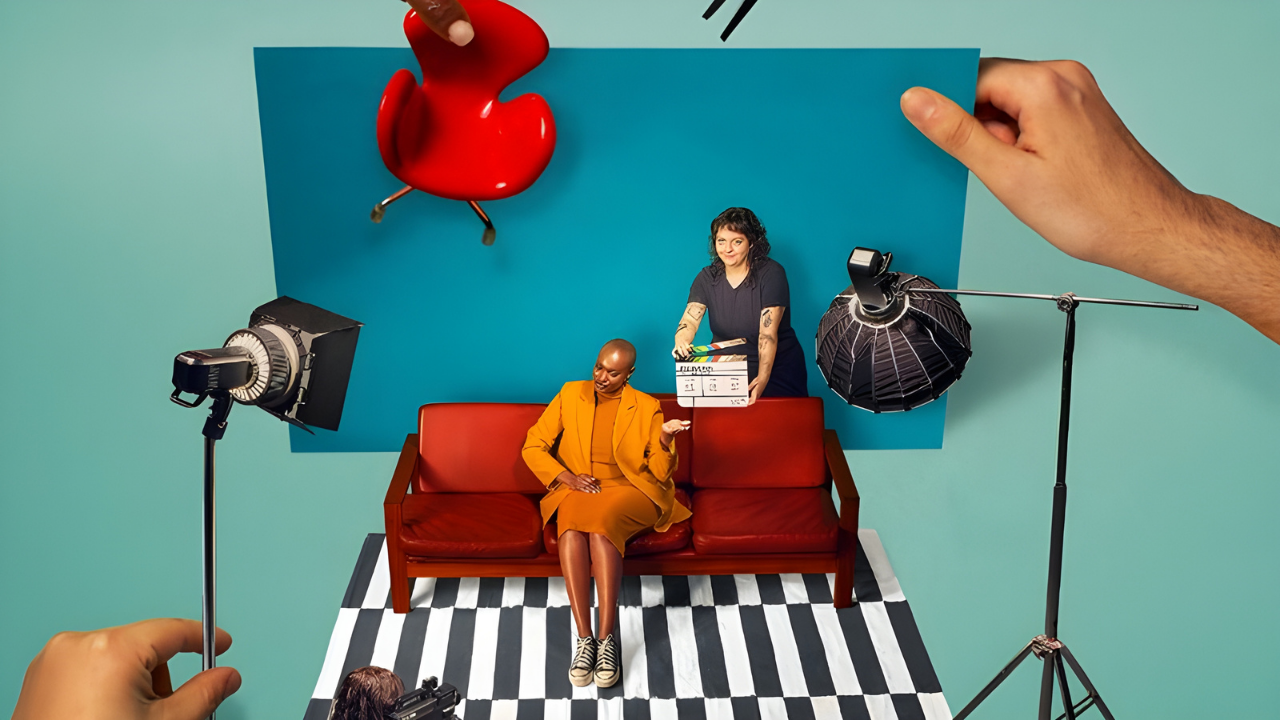
Imagine if your next product launch didn’t require a photoshoot.
No samples delayed in transit.
No reshoots.
No last-minute asset gaps across channels.
Imagine if, the moment your product was finalized, everything else was already in motion—e-commerce imagery ready, campaign visuals built, social content flowing, even immersive experiences waiting to be activated.
Not weeks later.
At the same time.
Now imagine this isn’t a faster version of your current process.
It’s a completely different one.
Fashion and beauty brands don’t have a content problem. They have a production model problem. That model is no longer keeping up with the speed, scale, or complexity of how brands are expected to show up today. Because while the demand for content has accelerated, the system behind it has not.
TODAY, CONTENT IS CONTINUOUS.
E-commerce updates weekly
Social moves daily
Campaigns overlap
New platforms keep emerging
And yet, behind the scenes, the process is still linear.
Design. Sample. Shoot. Distribute. Repeat.
The pressure most teams feel today is not a lack of creativity. It’s the inability to extend that creativity across every touchpoint without starting over. A single product now needs to exist everywhere—across e-commerce, campaigns, social, retail, and increasingly immersive environments. And yet, each of these still requires its own production process. The same product is photographed again. Restyled again. Recreated again. Not because it needs to be. But because the system demands it. If this sounds familiar, it’s because most organizations are built this way.
THIS IS WHERE THE INEFFICIENCY HIDES.

Not in the cost of a single shoot, but in the fact that everything has to be rebuilt—over and over again. And as the number of channels grows, so does the cost of maintaining that repetition.
What comes next is not an evolution of the current model. It’s a replacement.
A different model is starting to emerge—one where the unit of production is no longer the campaign. It’s the product itself. Not as a physical object, but as a fully realized digital version—built with enough precision and flexibility to exist across every context it needs to live in.
When the product becomes the system, everything changes. Content is no longer produced from scratch. It is generated from a core asset. Campaigns are no longer dependent on production cycles. They are composed. Channels are no longer separate workflows. They are extensions. A single product can now move across e-commerce, social, campaigns, film, and immersive environments without being rebuilt each time.
At first, this sounds like efficiency. Faster timelines. Lower costs. More output. But the deeper impact is structural. Because once the product exists as a digital foundation, it becomes reusable, adaptable, and scalable. It becomes independent of production cycles. And that changes how brands operate.
THE UNCOMFORTABLE QUESTION.

If a product can exist everywhere without being rebuilt—Why are we still rebuilding it?
Every reshoot. Every duplicated effort. Every fragmented asset pipeline. These are not creative decisions. They are symptoms of a system that hasn’t evolved. For leadership, this is not a creative shift. It’s an operational one. It requires rethinking when the digital version of the product is created, who owns it, and how it is used across the organization.
Because once the product becomes the source of all content, it can no longer sit at the end of the process. It has to move to the beginning.
For years, content has been treated as output—something that follows the product. What’s emerging now is a model where content is embedded in the product itself. Where the question is no longer:
How do we produce more content?
But: How do we build products that can generate content infinitely?
A simple principle is emerging:
Design once. Activate everywhere.
Not as a creative idea.
As an operating model.
The brands that adopt this model will not just move faster.
They will operate on a fundamentally different system—one where products are not static objects, but dynamic, extensible assets. What comes next will not look like an optimized version of today.
It will look like a different way of working entirely.
Access to this expertise starts here: www.wearetheboard.co
THE BOARD sits at the intersection of Brand, Business, and Culture—offering fractional leadership, project-based experts, and curated teams to help you move faster, smarter, and with far less risk. info@theboard.community
