
By Cynthia Spitalny, Marketing Executive | Growth & Brand Strategist | AI & Digital Innovation | 2 Strategic Exits & 1 IPO | ex-epocrates/athenahealth |Award-winning marketers
This article first ran in THE BOARD BRIEFING, our weekly LinkedIn newsletter for founders, leaders, and operators building in the new economy.
HOW WOMEN ARE REBUILDING SYSTEMS, STARTING WITH HEALTHCARE
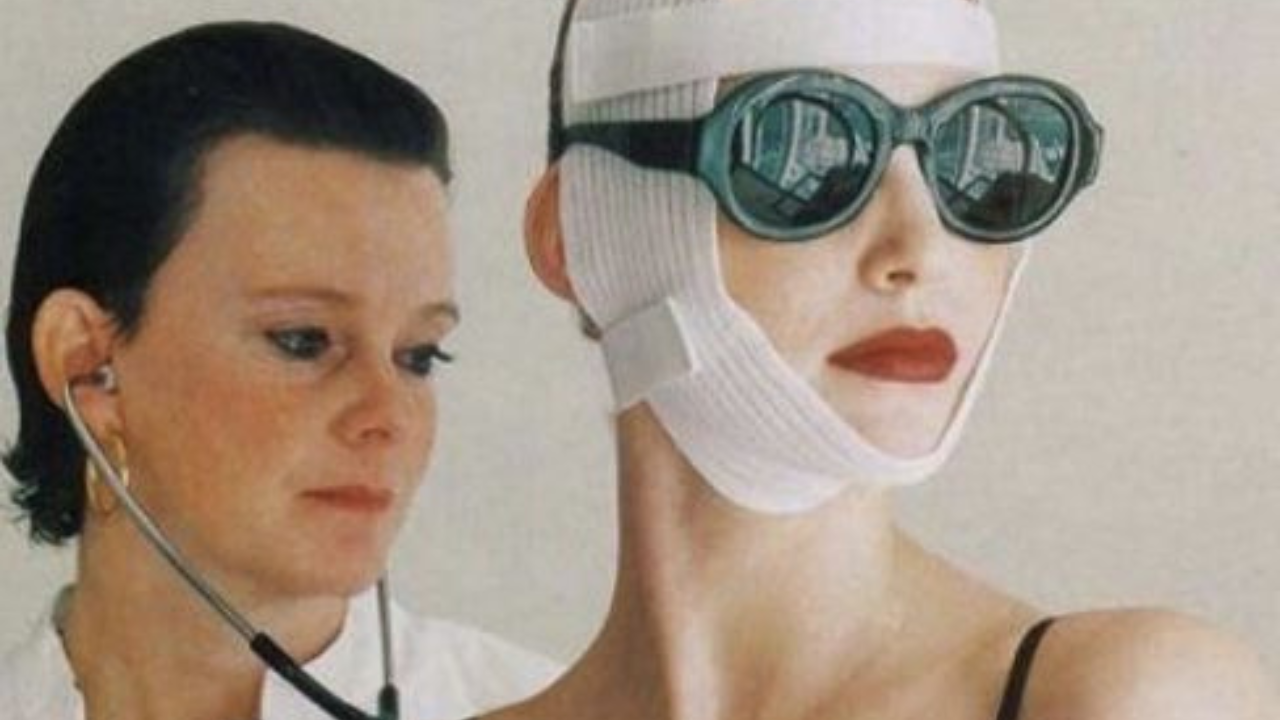
For centuries, medicine has treated women as smaller men, with a shrink-it-and-pink-it mentality. Now, a new generation of women isn’t waiting to be included—they’re rebuilding a broken system from the inside out.
For most of modern history, women have had to ask permission to participate.
In 1848, the first women’s rights convention convened in Seneca Falls—but women still couldn’t own property independently in most U.S. states. It wasn’t until 1974 with the Equal Credit Opportunity Act, a full century plus later, that a woman could open a credit card or secure a mortgage without a male co-signer.
And as recently as 1993, women were still excluded from much of clinical research—until the NIH Revitalization Act finally required federally funded trials to include them.
That means the solutions driving modern medicine have been built, tested, and validated primarily on men, with a male POV, and then funded by other men.
Even lifestyle products meant for women often weren’t created by them. The first commercial tampon, patented in 1931 by Dr. Earle Haas, was designed by a man. So was the birth control pill, co-developed by Gregory Pincus and John Rock. The modern speculum—still used in nearly every gynecological exam—dates back to a model created in the 1840s by J. Marion Sims, a physician who infamously experimented on enslaved Black women without anesthesia.
These facts aren’t trivia—they’re a reminder of just how deeply women’s health has been filtered through a male lens.
So it’s no wonder that many women feel unseen in healthcare. This way of thinking and designing products and protocols that excluded women as developers and thinkers, yet were built for women, were the first forms of cancel-culture that hushed, contained, and dismissed women’s voices.
BREAKING OLD SYSTEMS AND BUILDING BETTER ONES

Today, that’s changing. And not because the establishment decided to make space—but because women stopped waiting for permission.
Across industries, women are dismantling frameworks built by and for men—and rebuilding systems that work for them.
In healthcare, Dr. Mary Claire Haver is reframing menopause with science, not stigma. Dr. Stacy Sims is rewriting sports physiology around female biology. Chelsea Hirschhorn, founder of Frida, is shaping what it means to have access to postpartum care tailored to truly support women. And Halle Berry of Respin Health, is proving that digital care built around women’s transition into menopause doesn’t just fill a gap—it redefines the standard of care.
Beyond healthcare, the same pattern holds. Whitney Wolfe Herd (Bumble) built a safer social platform by centering women’s experience, after being pushed out of Tinder which she had co-founded. Morgane Sézalory (Sezane) and Amy Smilovic (Tibi) have redefined leadership around longevity and integrity, not burnout and bravado.
Women aren’t leaning into the old systems anymore. They’re quietly, steadily, re-architecting them so that they work for them and more broadly, for other women.
A NEW ERA OF HEALTH INNOVATION STARTING WITH WOMEN

The rise of digital health is also accelerating a shift that I am seeing in health tech, but in this case for FemTech solutions that are rewriting the rules of meaningful healthcare for women.
Cycle tracking, hormone mapping, and tele-menopause platforms aren’t just new categories—they’re acts of reclamation.
By designing products informed by women’s perspectives and data, female founders are closing decades-old gaps in research and care. Analysts predict the femtech market will exceed $100 billion by 2030, but the more meaningful story to me isn’t market size—it’s systemic change.
WOMEN ARE NO LONGER PASSIVE “PATIENTS”, THEY ARE ACTIVE PARTICIPANTS AND IN MANY CASES THE ARCHITECTS OF WHAT COMES NEXT.

Less disruption. More personal solutions by design.
As someone who’s spent over two decades helping brands launch and evolve, I see this moment as more than a market correction—it’s a cultural reckoning. And I’m elated to be tapped by FemTech brands to shape this next gen in tech innovation as someone who has been starving for these types of solutions and is also living and experiencing the life shifts that ushers in such solutions. I am the patient, the user experience participant, and the marketing expert wrapped into one neat package.
And from my vantage point, I am excited to see that we are shifting from extraction to empathy, from “one-size-fits-all” to deeply personal solutions in health tech. The goal of FemTech isn’t necessarily disruption; it’s customized design. Building systems that finally reflect the people they serve.
This isn’t the glossy “Girlboss” version of empowerment but applied to systems that are intrinsically built by men, for men. It’s the infrastructure of greater equity AND equality for women—powered by data, driven by experience, and grounded in purpose.
THE BOTTOM LINE
When women lead the design of systems that are intended to serve other women—whether in medicine, business, or technology—those systems are smarter, fairer, and more sustainable.
The future of women’s lifestyle, wellness, and health isn’t pink-it-and-shrink-it anymore. It’s personal. It’s meaningful. And it’s long overdue.
THE BOARD sits uniquely at the intersection of Brand, Business, and Culture. Fractional talent is the future, and THE BOARD is where it lives. 1:1 advisory, project-based experts, fractional leadership, and curated DREAM TEAMS to help you move faster, smarter, and with far less risk. Let’s talk!
